The quest for a radiant smile has evolved from a luxury into a cornerstone of professional and personal confidence. In the modern era of aesthetic dentistry, professional teeth bleaching has emerged as the most requested cosmetic procedure worldwide. However, as the market becomes saturated with over-the-counter DIY solutions, understanding the clinical nuances of a supervised teeth whitening treatment is essential for any patient prioritizing both results and oral health.
1. The Evolution of Teeth Brightening
Humanity has sought ways to whiten teeth for centuries, but 2026 marks a pinnacle in “Smart Dentistry.” We no longer just “bleach” teeth; we perform bio-compatible enamel restoration. Unlike the abrasive methods of the past, modern teeth brightening focuses on oxygenation. By using high-grade carbamide or hydrogen peroxide, clinicians can break down complex molecular stains without compromising the structural integrity of the hydroxyapatite crystals that make up your enamel.
At a professional level, a whitening treatment is a controlled chemical process. When you visit a specialist, the procedure is preceded by a diagnostic phase. This is crucial because not all discoloration is the same. Extrinsic stains (from coffee or tobacco) respond differently than intrinsic stains (caused by medication or trauma), and only a professional can determine the correct concentration required for your specific case.
2. Professional vs. Over-the-Counter: The Clinical Reality
While teeth whitening strips are a popular entry point for many, they represent a “blind” approach to chemistry. These strips use a standardized, low-concentration gel that often fails to reach the contoured crevices of the interproximal spaces (the gaps between teeth).
The Risks of DIY Strips:
Gingival Irritation: Strips often overlap with the gums, causing chemical burns.
Enamel Dehydration: Without professional desensitizing agents, DIY kits can lead to chronic sensitivity.
Uneven Shading: Strips cannot adapt to crowded or rotated teeth, leading to a “leopard spot” appearance.
In contrast, a clinical dental whitening treatment utilizes custom-fabricated trays or light-activated “power bleaching” that ensures every millimeter of the “aesthetic zone” is treated equally.
3. The Science of the “Bleaching” Agent
To understand how professional teeth bleaching works, one must look at the porous nature of enamel. Enamel is not a solid wall; it is a lattice of prisms. Over time, organic pigments (chromogens) get trapped within these prisms.
Professional gels release oxygen molecules that enter the enamel and dentin. These molecules “oxidize” the stains, breaking the double bonds of the pigment molecules. When the bond is broken, the molecule becomes smaller and colorless, resulting in the teeth brightening effect.
4. Step-by-Step: The Clinical Journey
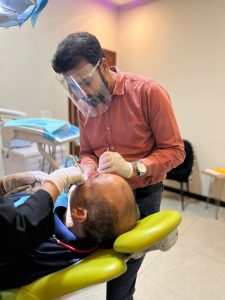
A 2,000-word deep dive requires looking at what actually happens in the chair. A premium professional teeth bleaching session follows a strict protocol:
Pre-Bleach Prophylaxis: A professional cleaning to remove the “pellicle” layer (a thin film on the teeth) that can block the whitening gel.
Gingival Isolation: A liquid dam is applied to the gums and light-cured. This acts as a protective barrier for your soft tissue.
Gel Application & Activation: The gel is applied in 15-20 minute intervals. In many modern clinics, a blue plasma light is used to catalyze the reaction.
Post-Treatment Fluoridation: Once the desired shade is reached, a high-concentration fluoride paste is applied to “re-mineralize” the teeth.
5. Addressing Patient Concerns: Sensitivity and Safety
The number one deterrent for patients seeking a dental whitening treatment is the fear of pain. “Zingers” (sudden sharp pains) were common in the past, but 2026 technology has largely solved this. Modern professional gels are “buffered,” meaning their pH levels are balanced to match the mouth’s natural environment, preventing the acid erosion often seen in cheap acidic whitening kits.
6. Longevity and Maintenance
How long does a whitening treatment last? The answer depends on your “aftercare.” For the first 48 hours post-treatment, the enamel is slightly more porous. Patients are advised to follow the “White Diet,” avoiding dark berries, soy sauce, red wine, and tobacco products. For long-term success, many patients supplement their clinical visits with professional-grade maintenance kits.
7. The Psychological Impact of a Brighter Smile
The “Halo Effect” is a well-documented psychological phenomenon where individuals with brighter, healthier-looking teeth are perceived as more successful and trustworthy. In professional environments, a bright smile is often considered a vital part of one’s “personal brand.”
8. Global Standards in Aesthetic Dentistry
The safety of these procedures is governed by strict international clinical guidelines. According to the World Dental Federation (FDI), whitening products containing more than 0.1% hydrogen peroxide should only be distributed through dental practitioners to ensure patient safety and the prevention of permanent enamel erosion. This reinforces why a supervised dental whitening treatment is a medical necessity rather than just a cosmetic whim.
9. Conclusion: The Verdict on Your Smile
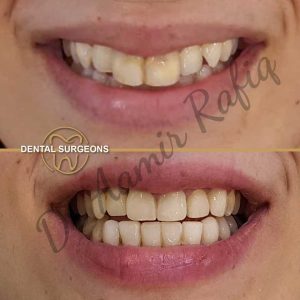
In summary, the journey to a brighter smile is one that should be navigated with professional expertise. While the market is flooded with quick-fix options like teeth whitening strips, these solutions often lack the precision and safety profile necessary for long-term oral health. A clinical dental whitening treatment provides more than just a cosmetic change; it offers a scientifically backed transformation that respects the biological limits of your enamel.
By choosing professional teeth bleaching, you are opting for a customized experience that accounts for your dental history, sensitivity levels, and aesthetic goals. In an era where a first impression is often determined by a smile, ensuring that yours is both radiant and healthy is a vital investment.
Ready to transform your appearance? Schedule your consultation with the specialists at Dental Surgeons today and experience the difference that medical-grade technology can make for your teeth brightening goals.
Frequently Asked Questions (FAQs)
Is dental whitening treatment safe for enamel?
Yes. When performed by a professional, the chemistry is balanced to ensure that only the stains are oxidized, leaving the structural integrity of your enamel intact.
Can teeth whitening strips achieve the same results as a dentist?
No. Teeth whitening strips have a much lower concentration of active ingredients and lack the custom-fit application required to reach all surfaces of the teeth evenly.
Does the procedure hurt?
Most patients experience little to no discomfort. We use specialized desensitizing agents before and after the whitening treatment to ensure a painless experience.